Your detailed emails get ignored. Your thoughtful presentations fall flat. Your well-researched proposals stall. Often, communication problems are not about the quality of the work, but rather misalignment of communication.
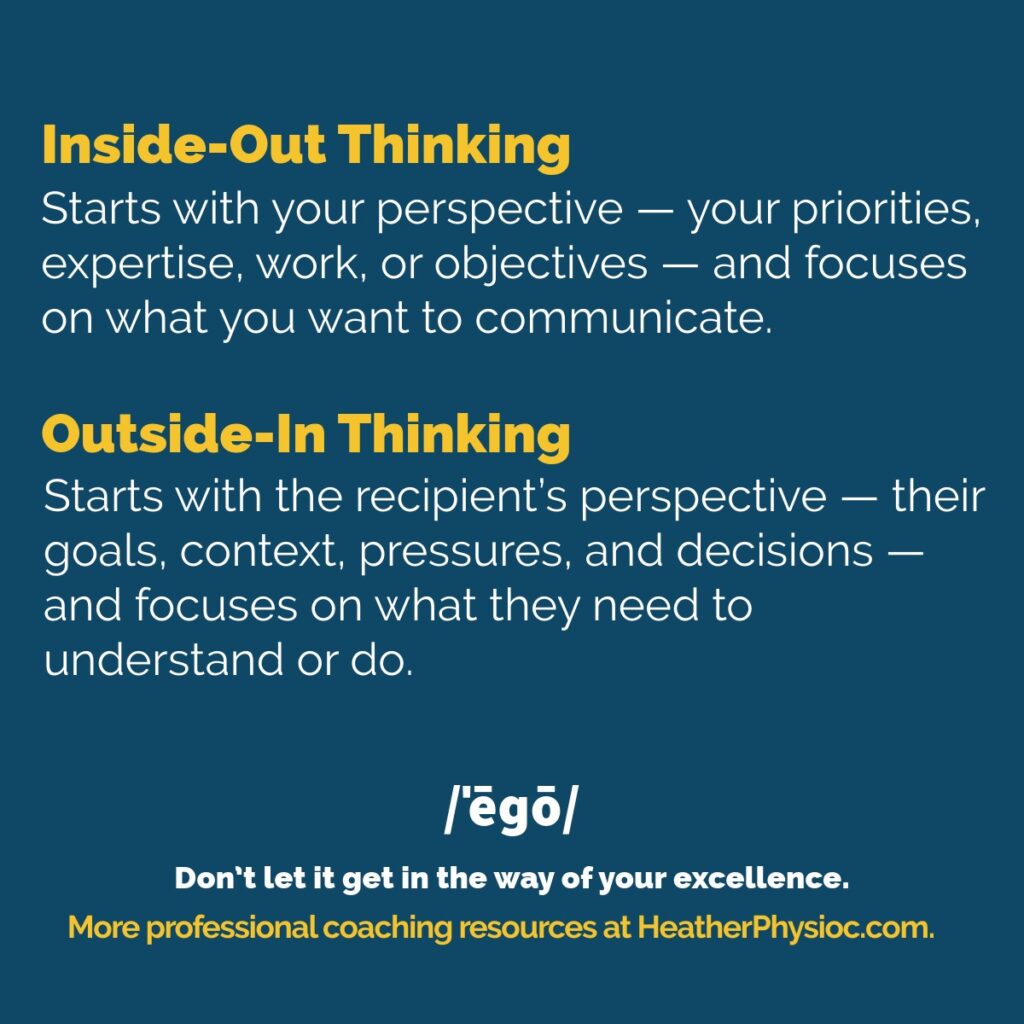
Many people make the common mistake of building communication from the inside (self) out, instead of outside (audience) in. Inside-out thinking starts with what I want to say, what I worked on, and what I think matters. Outside-in thinking starts somewhere else entirely: Who is this actually serving?
Shift your mindset from self-first to recipient-first.
Whether you’re writing an email, building a deck, sharing analysis, or pitching an idea, your work only succeeds if it helps the other person succeed. When you design your message around their reality — instead of your effort — your work becomes easier to understand, faster to act on, and more likely to move forward.
Helping your ego take a backseat to their experience starts by getting specific:
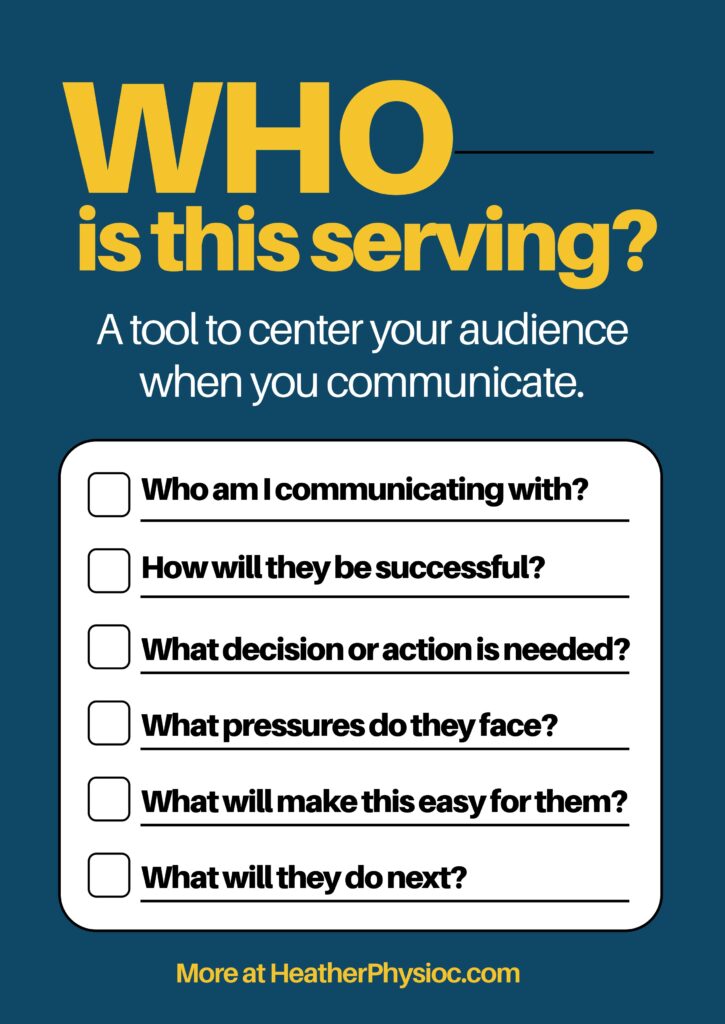
Who am I communicating with?
What does success look like to them?
What matters to them right now?
What pressures or risks are they under?
Then, get clear on what your intent is. The goal isn’t to show everything you did; it’s to help them do what comes next.
What do they need to understand?
What decision needs to be made?
What action should happen next?
When these things are crystal clear to you, your communication changes. You become more selective with details, instead of exhaustive. You begin to structure things in a logical way that results in decision-ready communication.
So when you need to land a message and align with an audience, how can you design audience-centered communications and work that reduce friction?
Tips for landing communication that serves.
Match their language, not your expertise. Translate process into impact. Replace methods with outcomes they care about. Lead with the parts that matter to them, and save the supporting details for later.
Use examples from their world. Tie your message to their responsibilities, timelines, and risks in a way that shows you understand their realities.
Align the ask to their incentives. Explain why the action helps them succeed — faster decisions, lower risk, better results, or in another way that aligns with their interests.
Design the format for how they work. Consider what you know about them, their role, or their needs when tailoring your communication. Consider summary vs. detail, recommendation vs. analysis, decision-ready vs. exploratory.
Define success as their behavior change. If you can’t answer “What will they do differently after this?” the message isn’t finished.
Remove friction. Would this make sense on a busy day? How much effort are you asking from them to understand or act?
Pressure-test against constraint. Time. Resources. Competing priorities. Adjust your communication to reduce the burden on the recipient, not add to it.